Termite Control in Chicago, IL
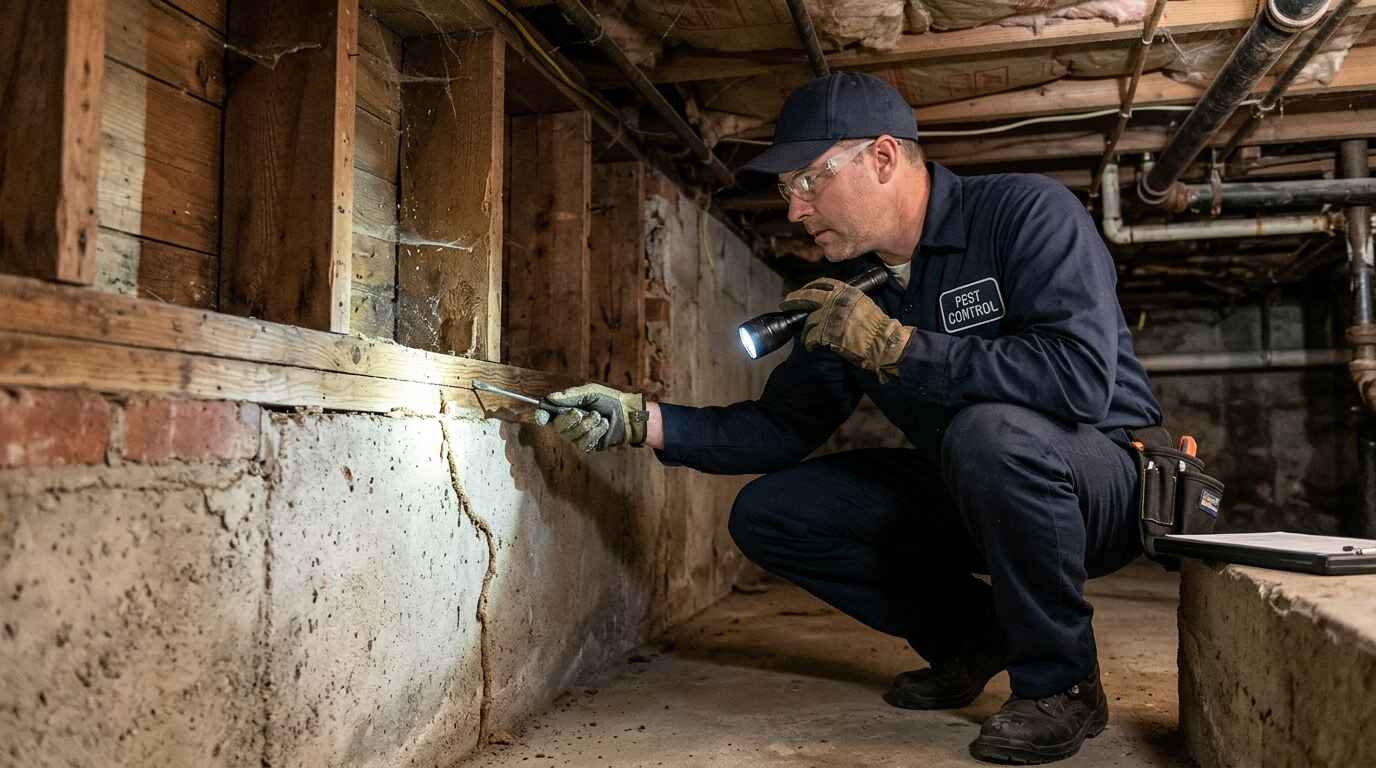
In Pilsen’s tight masonry lots, termite work often means staging around narrow alleys, basements, and shared walls. One phone conversation sorts the inspection or treatment that fits the structure.
Plan
The right visit for the job
Brick two-flats, bungalow basements, and older frame additions commonly start with an inspection, then move to targeted treatment when activity and accessible entry points are confirmed.
Quote
A straight quote
The exact quote is given on the call, based on structure size, activity, access, treatment materials, travel, and time on site.
Time
A visit time
The visit time is set on the call around property access, tenant schedules, parking, and the work area.
From Portage Park bungalows to Hyde Park two-flats, Chicago termite work can involve basements, crawl spaces, masonry joints, and rear yards. Lakeview rehabs, South Side frame homes, and commercial buildings along busy corridors each present different access points. The treatment is planned around what the technician can safely examine and reach.
Services
Termite Control Services in Chicago
Chicago housing puts termite work close to masonry foundations, finished basements, shared walls, rear porches, and narrow alleys. A technician may need to trace activity from sill plates or utility penetrations instead of relying on open yard access. Frame homes, rehabs, two-flats, and commercial spaces in Cook County are assessed differently, especially where dense paving limits treatment routes and staging.
Residential termite control
Treatment for Chicago bungalows, frame homes, two-flats, and masonry residences where basements or rear additions limit direct foundation access.
Termite inspection
An inspection examines accessible Chicago basements, crawl spaces, sill areas, and exterior conditions for activity, damage, and entry points.
Wood-destroying insect report
A report documents visible wood-destroying insect evidence for Chicago home transactions, including older frame housing and renovated two-flats.
Preventive termite treatment
Preventive work addresses conducive conditions and likely routes around Chicago foundations, porches, additions, and paved side yards.
Subterranean termite treatment
Subterranean treatment follows activity near Chicago slabs, basement walls, soil lines, plumbing penetrations, and other ground-connected structure areas.
Commercial termite control
Commercial service covers Chicago storefronts, multi-unit buildings, warehouses, and offices where tenant access and limited staging affect the treatment plan.
Termite damage assessment
Damage assessment distinguishes termite impact from moisture-related deterioration in Chicago basements, crawl spaces, porches, and older structural wood.
Sizes
Termite Control Options Available in Chicago
The most common Chicago job begins with an inspection because dense lots and finished basements can hide routes without showing the full treatment area. Targeted treatment often fits confirmed activity, while whole-home treatment suits broader evidence or several connected entry routes.
| Size | Dimensions | Good for |
|---|---|---|
| Termite Inspection | A technician examines accessible areas for termites, conducive conditions, and evidence of damage. | This fits a Chicago bungalow purchase, a damp basement near a masonry foundation, or unexplained wood damage where activity and conducive conditions still need to be identified. |
| Targeted Treatment | Treatment focuses on identified activity and accessible entry or nesting areas. | This suits confirmed activity at a sill, porch connection, utility penetration, or accessible nesting area in a Chicago two-flat or tightly paved residential lot. |
| Whole-Home Treatment | A coordinated treatment addresses active termite activity around the structure and likely entry routes. | This is used when activity or likely entry routes extend around a Chicago structure, including connected basements, additions, rear porches, and multiple foundation sides. |
Which option fits common Chicago projects
| Project | Size | Why |
|---|---|---|
| Bungalow basement | inspection | Older Chicago bungalows often conceal sill and foundation conditions behind finished walls, storage, or mechanical equipment. |
| Two-flat wood damage | targeted treatment | A confirmed area near a porch, sill, or basement entry can be treated without assuming the entire Chicago building is affected. |
| Home purchase review | inspection | An inspection checks accessible structure areas and visible wood conditions before a Chicago transaction moves forward. |
| Paved side yard | targeted treatment | Dense paving in Chicago can restrict exterior access, making confirmed entry or nesting areas the practical treatment focus. |
| Multi-unit activity | whole-home treatment | Connected units, shared foundations, and several activity points may require a coordinated treatment around the Chicago structure. |
Chicago termite treatment scheduling
Click Here to Call (888) 510-9023Cost
What Affects Termite Control Cost in Chicago
The exact quote is given on the call after the job is discussed. Cost depends on the type and size of the structure, evidence found, treatment materials, time on site, access around Chicago masonry and paving, distance, and any after-hours work.
To avoid surprise charges, describe the building, visible damage, basement or crawl-space access, parking limits, and any prior treatment on the call. The exact quote is reviewed before the visit is set.
Structure and activity
The number of levels, connected units, foundation layout, and extent of termite evidence affect how much of a Chicago property must be examined and treated.
Access and staging
Narrow alleys, parked cars, shared walls, dense paving, finished basements, and limited exterior clearance can change labor and access requirements in Chicago.
Parts and materials
Treatment materials and any needed parts or application equipment depend on the termite type, entry route, wood condition, and surfaces that can be safely reached.
Travel and timing
Distance to the Chicago property, parking conditions, after-hours work, tenant coordination, and time spent protecting finished areas can affect the quoted cost.
What goes in
Types of Work We Handle
Active Termite Infestations
This covers visible or suspected activity in homes, two-flats, and commercial buildings, including Chicago basement sill areas, porches, additions, and shared foundation zones.
Preventive Termite Protection
Preventive work addresses conditions that can invite termites around Chicago foundations, such as soil contact, moisture, wood storage, and accessible entry routes.
Wood Damage Assessment
Assessment examines suspected termite damage and competing moisture causes in Chicago bungalows, frame homes, rear porches, crawl spaces, and finished basements.
Not accepted
Do not place people, pets, food, personal items, hazardous materials, or unrelated construction debris in the work area, and termite treatment does not repair structural damage.
How to protect your home in Chicago
Clear the work area
Move stored items away from basement walls, crawl-space openings, utility rooms, and other areas the technician must examine.
Note visible evidence
Keep photos, mud tubes, damaged wood, discarded wings, and locations of recent sightings ready for discussion.
Mention prior treatment
Share any previous termite service, product information, repairs, or unresolved moisture issues before the visit.
Arrange property access
Coordinate keys, tenants, landlords, basement doors, crawl-space entries, and locked rear yards before the scheduled visit.
Keep pets away
Separate pets and children from the work area, especially near basements, porches, utility rooms, and treatment access points.
Projects
Termite Control for Different Projects
Termite Inspection Control
Inspection-based control checks accessible structure areas in Chicago homes, including bungalow basements, frame additions, porches, and masonry foundation edges.
Subterranean Termite Control
This service follows ground-connected activity near Chicago slabs, basement walls, plumbing penetrations, soil lines, and foundation cracks.
Drywood Termite Control
Drywood termite work focuses on infested wood and accessible voids in Chicago frame housing, porches, trim, and older renovated interiors.
Preventive Termite Control
Preventive control addresses likely routes and conducive conditions around Chicago foundations, additions, rear yards, and paved side lots.
Commercial Termite Control
Commercial control is planned for Chicago storefronts, offices, warehouses, and multi-unit properties with tenant schedules and restricted staging.
Termite Damage Control
Damage control assesses affected wood in Chicago basements, sill plates, porches, crawl spaces, and additions before repair decisions are made.
Termite Barrier Control
Barrier control focuses on reachable foundation and entry routes around Chicago structures where dense paving or masonry limits conventional access.
How it works
How Termite Control Works in Chicago
Request An Inspection
Describe the Chicago property, suspected evidence, building type, basement or crawl-space access, and any prior treatment when the visit is arranged.
Identify Termite Activity
The technician examines accessible wood, foundation edges, moisture conditions, entry routes, and evidence that may distinguish termites from other damage.
Review The Treatment Plan
The treatment plan explains the identified activity, reachable areas, materials, preparation needs, and access limits created by the Chicago property.
Protect The Structure
Treatment addresses active routes or broader conditions as planned, while repairs to damaged wood and correction of moisture sources remain separate work.
Weather in Chicago
Chicago freezing winters can limit exterior access and expose foundation conditions only after thawing. Humid summers can increase moisture-related conditions, while severe storms may leave standing water, debris, or blocked staging areas. The technician considers current ground and access conditions when setting the visit.
Treatment area access
Work may occur in basements, crawl spaces, slabs, utility rooms, sill areas, porches, foundation edges, and rear yards. Chicago masonry walls, shared lots, finished rooms, narrow alleys, parked cars, and dense paving can restrict inspection paths and treatment staging.
Permits
Termite Control Permits and Placement Rules in Chicago
Access rules
Most termite treatment is performed on private property and does not usually involve street work. If access requires occupying public space, sidewalk placement, or another city-controlled area, ask the City of Chicago about approval. The call can cover which party needs to arrange any required local inspection or approval.
Landlord and HOA requirements
Cook County condominiums, homeowner associations, landlords, and cooperatives may have rules for exterior treatment, shared foundations, tenant entry, parking, or notice. Review the property documents and obtain building approval before work affecting common areas.
What the work area needs
Clear a path to the basement, crawl space, utility room, foundation, and affected wood. Provide a safe place for the work vehicle, keep pets and people away, and account for snow, standing water, storm debris, and frozen ground when preparing the Chicago property.
Timing
Seasons, Weather and the Best Time to Call in Chicago
Termite concerns often become more visible in Chicago during spring thaw and humid summer weather, when moisture and renewed insect activity expose conditions around foundations and wood. Real estate inspections can increase during warmer months. Winter still brings indoor inspection work, especially in heated basements, but frozen ground and snow can limit exterior access.
Spring thaw conditions
Thawing ground, runoff, and storm moisture can reveal mud tubes, damp sill areas, and standing water around Chicago foundations. Clear drainage paths and exterior access before the inspection.
Winter interior inspections
Freezing conditions may restrict yard and foundation work, while heated basements, utility rooms, and crawl spaces remain accessible for inspection. Snow, ice, and narrow Chicago staging areas still require preparation.
Chicago termite inspection planning
Click Here to Call (888) 510-9023Service area
Termite Control Areas We Serve
Service covers Chicago neighborhoods across the North, West, and South Sides, including Portage Park, Lakeview, Pilsen, Hyde Park, Logan Square, Bridgeport, and Beverly. Work also reaches dense corridors, bungalow belts, two-flats, commercial blocks, and Cook County properties near River Forest, Skokie, Lake Zurich, Joliet, and Island Lake.
Chicago is part of our Cook County coverage, and we also serve the neighboring communities below.
Why us
Why Call a Termite Control in Chicago?
Chicago termite work often starts below grade, where finished basements, old sill plates, shared masonry walls, and utility penetrations can hide the route. Dense paving and narrow alleys also affect where equipment and materials can be staged, so the treatment plan has to follow the actual structure rather than a generic lot layout.
A Chicago bungalow, a frame two-flat, and a renovated commercial building do not expose wood or foundations the same way. Inspection access, tenant coordination, storm conditions, and winter ground limits all change the job, especially in older neighborhoods where additions and rear porches connect several possible entry points.
FAQs
Termite Control FAQs
How much does termite control cost in Chicago?
Chicago termite control cost depends on the structure size, activity, accessible treatment area, materials, time on site, distance, access, and after-hours conditions. The exact quote is given on the call. Describe the building type, basement or crawl-space access, visible evidence, parking limits, and previous treatment history.
Which termite visit fits my Chicago home?
An inspection fits suspected activity or a property review, targeted treatment fits identified activity in reachable areas, and whole-home treatment fits activity or likely routes around much of the structure. Chicago bungalows and two-flats often begin with an inspection because finished basements and additions can hide foundation conditions.
How soon can someone come for termite control in Chicago?
The visit time is set on the call after the property, access, urgency, and work area are discussed. Ask about after-hours or same-day availability if needed, but do not assume a timing promise. Have the address, building type, and access details ready.
What does Chicago termite treatment cover?
Termite treatment addresses identified termite activity, accessible entry or nesting areas, and planned routes around the structure. The exact scope depends on the inspection. In Chicago, the plan may involve basement sill areas, foundation edges, porches, slabs, utility penetrations, or paved side-yard access.
What does termite treatment not cover?
Termite treatment does not repair structural damage, replace rotted wood, correct every moisture source, or cover unrelated plumbing and construction work. In Chicago basements and rear porches, moisture damage can resemble termite damage, so the technician separates visible insect evidence from repair needs.
Do Chicago termite treatments need permits or inspections?
Most termite treatment on private property does not involve a permit, but street occupancy, sidewalk access, or city-controlled space can require approval from the City of Chicago. Ask during the call which party should arrange any required local inspection or approval for the specific work area.
How much access is needed for Chicago termite service?
Access is needed to the suspected wood, basement, crawl space, utility room, foundation edge, porch, or yard area identified for inspection or treatment. Move stored items, arrange keys, and keep pets and people clear. Narrow alleys, shared walls, finished rooms, and parked cars can restrict staging.
What should I have ready when booking Chicago termite control?
Have the property address, building type, approximate age if known, affected locations, photos or signs of activity, basement and crawl-space details, tenant or landlord information, parking limits, and previous treatment records ready. These details help match the visit to the Chicago structure.
Does Chicago weather affect termite treatment?
Yes, freezing ground, snow, humid summers, severe storms, standing water, and storm debris can affect exterior inspection and treatment access. Heated basements and utility rooms may remain workable in winter, while thaw and storm conditions require clear paths and safe staging.
Can termite treatment work around Chicago masonry and paved lots?
Yes, the treatment plan can focus on accessible routes around masonry foundations, slabs, utility penetrations, porches, and reachable soil or wood areas. Dense paved lots and narrow alleys may limit exterior methods, so the technician reviews the actual access before selecting targeted or whole-home treatment.