Termite Control in Sterling Heights, MI
Postwar ranches near Schoenherr Road often hide termite activity behind finished basements and slab edges. One call gets the inspection, treatment recommendation, and access questions sorted for your Sterling Heights property.
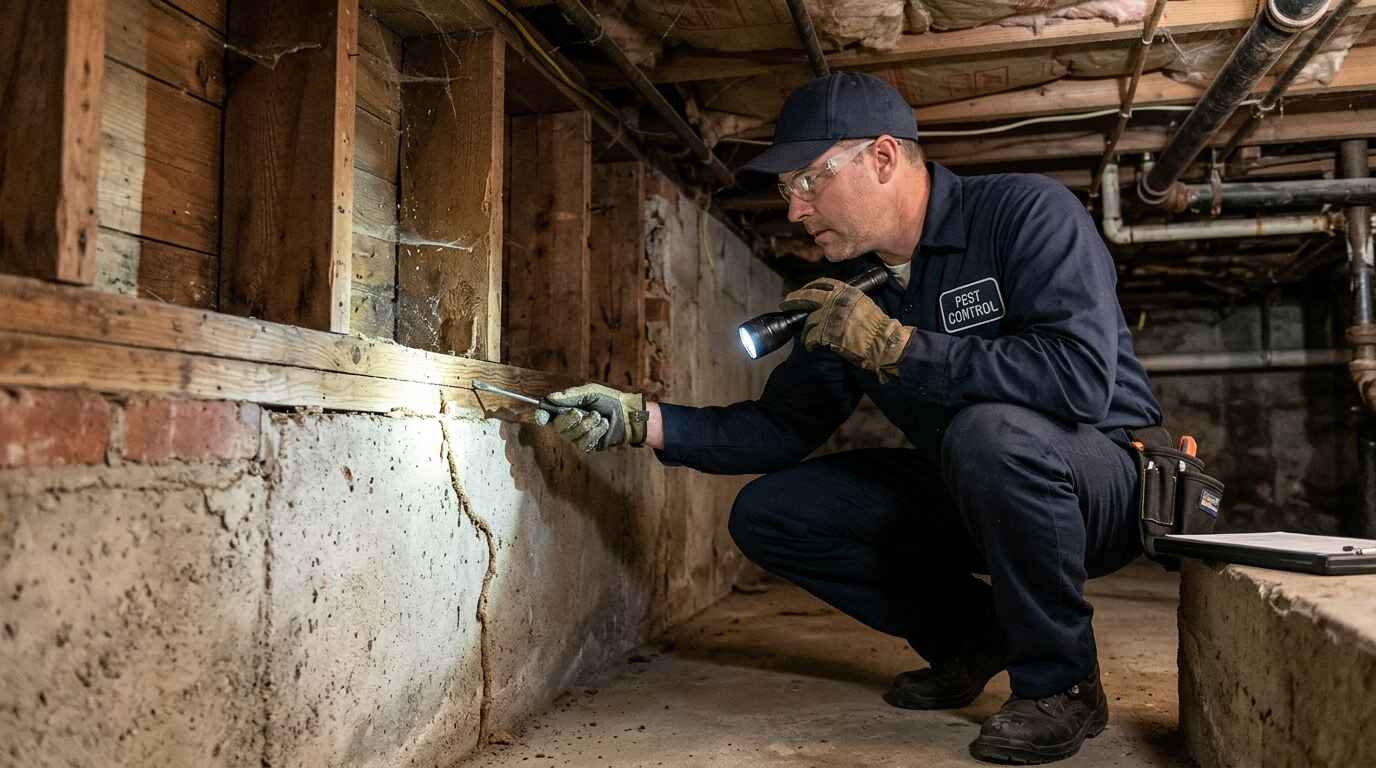
Plan
The right visit for the job
Large postwar subdivision homes commonly need an inspection first, with targeted treatment for confirmed activity or whole-home treatment when routes reach several sides of the structure.
Quote
A straight quote
The exact quote is given on the call, based on treatment scope, access, materials, time on site, and distance.
Time
A visit time
The visit time is set on the call around access to the home, basement, crawl space, and foundation perimeter.
From ranch homes near Mound Road to newer houses around Lakeside Mall and established streets west of Schoenherr Road, Sterling Heights properties present different foundation access. Clay soil, snowmelt, and humid summers affect perimeter inspection, while finished basements and attached garages can conceal entry points.
Services
Termite Control Services in Sterling Heights
Sterling Heights has a broad stock of postwar ranches, split levels, and detached subdivision homes, along with commercial buildings along Hall Road and Mound Road. Finished basements, attached garages, clay soil, and tight side yards can change where evidence is found and how a treatment reaches the foundation perimeter.
Residential termite control
Treatment for Sterling Heights houses considers finished basements, attached garages, slab edges, and foundation access around established subdivision lots.
Termite inspection
An inspection examines accessible areas for termites, conducive conditions, and damage around Sterling Heights basements, crawl spaces, utility rooms, and exterior walls.
Wood-destroying insect report
A report documents accessible findings for Sterling Heights property transactions, including damage or conditions found in older ranches and split-level homes.
Preventive termite treatment
Preventive work addresses likely entry routes around Sterling Heights foundations, especially where clay soil, mulch, moisture, or snowmelt keep edges damp.
Subterranean termite treatment
Subterranean termite treatment follows soil-to-structure routes around Sterling Heights homes, garages, additions, and foundation sections with limited side-yard access.
Commercial termite control
Commercial properties along Hall Road and Mound Road may need coordinated inspection and treatment around tenant areas, storage rooms, and building perimeters.
Termite damage assessment
Damage assessment separates visible wood deterioration from termite evidence in Sterling Heights basements, framing, sill areas, and unfinished utility spaces.
Sizes
Termite Control Options Available in Sterling Heights
The inspection is the usual starting point for Sterling Heights termite work because large postwar homes can have several concealed or inaccessible foundation sections. Treatment size follows confirmed activity, entry routes, and how much of the structure can be reached safely.
| Size | Dimensions | Good for |
|---|---|---|
| Termite Inspection | A technician examines accessible areas for termites, conducive conditions, and evidence of damage. | This fits a Sterling Heights homeowner seeing wings, mud tubes, damaged trim, or damp foundation areas. The technician examines accessible spaces and identifies activity or conditions that support it. |
| Targeted Treatment | Treatment focuses on identified activity and accessible entry or nesting areas. | This suits a defined activity area, such as one foundation wall, garage edge, crawl space, or basement section near a postwar subdivision home in Sterling Heights. |
| Whole-Home Treatment | A coordinated treatment addresses active termite activity around the structure and likely entry routes. | This fits active activity or likely entry routes affecting several sides of a Sterling Heights house, particularly where additions, attached garages, and finished basements complicate access. |
Which option fits common Sterling Heights projects
| Project | Size | Why |
|---|---|---|
| Basement evidence | inspection | An inspection checks accessible framing, sill areas, utility spaces, and foundation conditions before treatment is selected. |
| Garage mud tubes | targeted treatment | A focused treatment can address confirmed activity along an accessible garage foundation edge and nearby entry route. |
| Ranch home activity | whole-home treatment | A whole-home treatment suits activity extending across several perimeter sections of an established Sterling Heights ranch. |
| Home sale report | inspection | An inspection documents accessible findings for a transaction without assuming treatment is needed before evidence is reviewed. |
| Damp foundation edge | targeted treatment | A targeted treatment fits confirmed activity at one wet perimeter section while the surrounding structure is checked for spread. |
Schedule Sterling Heights termite inspection
Click Here to Call (888) 510-9023Cost
What Affects Termite Control Cost in Sterling Heights
The exact quote is given on the call after the job is discussed. Cost depends on the type and size of the structure, confirmed activity, parts and materials, time on site, access around the foundation, distance, and any after-hours work.
Describe the structure, visible evidence, access limits, and preferred visit timing on the call. The quote is reviewed before work is scheduled, so the scope is not guessed from a short description.
Structure and activity
The size of the Sterling Heights structure, termite type, affected areas, and whether activity reaches several sides influence the treatment scope.
Access around foundation
Tight side yards, attached garages, finished basements, crawl spaces, snow, and clay soil can change the time needed to reach work areas.
Parts and materials
Treatment materials and any needed barrier or access components depend on the identified entry route, structure condition, and selected treatment plan.
Travel and scheduling
Distance from the service area, parking conditions, access delays, and after-hours work can affect the quote for a Sterling Heights visit.
What goes in
Types of Work We Handle
Active Termite Infestations
This covers confirmed or suspected activity in walls, basements, crawl spaces, garages, and foundation edges, including a typical Sterling Heights ranch with mud tubes near the attached garage.
Preventive Termite Protection
This covers treatment planning for likely entry routes and conducive conditions around Sterling Heights homes where soil, moisture, mulch, or snowmelt affect the foundation perimeter.
Wood Damage Assessment
This covers accessible wood damage review in framing, trim, sill areas, and unfinished spaces, including older postwar houses in Sterling Heights and surrounding Macomb County.
Not accepted
The service does not cover inaccessible areas without suitable entry, unrelated structural repairs, general debris removal, or materials and conditions outside the agreed termite treatment scope.
How to protect your home in Sterling Heights
Gather property details
Have the property type, approximate age, basement or crawl space information, and known additions ready for the call.
Describe visible evidence
Mention mud tubes, discarded wings, hollow wood, damaged trim, moisture, and where each sign was found.
Clear interior access
Move stored items away from basement walls, utility rooms, crawl spaces, and other areas needing inspection.
Check outdoor access
Note fences, tight side yards, decks, patios, snow, and landscaping that may limit foundation perimeter work.
Secure people and pets
Plan to keep household members and pets clear of the work area while the technician examines and treats the property.
Projects
Termite Control for Different Projects
Termite Inspection Control
Inspection work in Sterling Heights identifies activity and conducive conditions around postwar ranches, split levels, basements, garages, and accessible foundation sections.
Subterranean Termite Control
Subterranean control follows soil-based entry routes around Sterling Heights foundations, especially where clay soil and snowmelt keep perimeter areas damp.
Drywood Termite Control
Drywood termite control begins with an inspection of accessible wood and concealed areas, including finished rooms and older structural sections in Sterling Heights.
Preventive Termite Control
Preventive work helps address likely entry routes around Sterling Heights homes before visible activity spreads through foundation edges, garages, or additions.
Commercial Termite Control
Commercial termite control serves buildings along Hall Road, Mound Road, and other Macomb County corridors where storage, tenant, and perimeter access must be coordinated.
Termite Damage Control
Damage control assesses affected wood in Sterling Heights basements, crawl spaces, trim, sill areas, and utility rooms before treatment scope is selected.
Termite Barrier Control
Barrier work focuses on accessible foundation routes around Sterling Heights houses, with placement shaped by decks, patios, landscaping, clay soil, and narrow side yards.
How it works
How Termite Control Works in Sterling Heights
Request An Inspection
Describe the Sterling Heights property, visible evidence, foundation type, and any basement, crawl space, garage, or access limitations.
Identify Termite Activity
The technician examines accessible areas, checks conducive conditions, and distinguishes termite evidence from ordinary moisture or wood deterioration.
Review The Treatment Plan
The treatment plan explains the affected areas, likely entry routes, access needed, materials, and the work selected for the structure.
Protect The Structure
Treatment addresses the agreed areas, while the property owner follows access, clearance, and moisture control instructions for the Sterling Heights home.
Weather in Sterling Heights
Sterling Heights winters bring snow and freeze-thaw conditions, while spring snowmelt can leave clay soil wet around foundation edges. Summer humidity can keep shaded perimeter areas damp. Weather may limit exterior access or change where evidence is visible, so the work area is reviewed on site.
Treatment area access
Work may occur in crawl spaces, basements, slabs, garages, utility rooms, wall-adjacent areas, and yards around the foundation. Finished walls, stored belongings, decks, patios, fences, narrow Sterling Heights side yards, snow, and wet clay can limit access and change the treatment approach.
Permits
Termite Control Permits and Placement Rules in Sterling Heights
Access rules
Most termite treatments on private property do not involve a street permit, but work that affects public space, excavation, or a required local inspection should be confirmed with the City of Sterling Heights. The call covers whether local approval applies and who is responsible for arranging it.
Landlord and HOA requirements
Macomb County subdivisions may have association rules, covenants, or landlord requirements for exterior treatment, access, landscaping changes, and tenant entry. Check those rules before scheduling work on a managed Sterling Heights property.
What the work area needs
Clear the problem area, basement walls, crawl-space entry, utility room, and foundation perimeter as applicable. Provide parking for the work vehicle, keep people and pets away, and account for snow, thawing ground, wet clay, fences, decks, and narrow side yards.
Timing
Seasons, Weather and the Best Time to Call in Sterling Heights
Spring thaw often exposes damp foundation conditions and activity around Sterling Heights homes. Summer humidity can support conducive moisture, while fall maintenance and winter storage may reveal mud tubes or damaged wood. Busy periods depend on visible evidence, property sales, weather, and access, so the visit time is set on the call.
Spring thaw and soil moisture
Snowmelt can leave clay soil wet against foundation walls and make perimeter inspection more difficult. Clear snow, stored items, and downspout areas where possible so accessible routes can be examined.
Summer humidity and activity
Humid Sterling Heights summers can keep shaded foundation edges and crawl spaces damp. Check for moisture, blocked access, and landscaping contact before the technician reviews the structure.
Plan Sterling Heights termite treatment
Click Here to Call (888) 510-9023Service area
Termite Control Areas We Serve
Service covers Sterling Heights neighborhoods and corridors around Mound Road, Schoenherr Road, Hall Road, Lakeside Mall, and the city’s established subdivision streets. Nearby Macomb County communities can be discussed on the call, including Oak Park, Howell, Temperance, Grass Lake, and Bay City when coverage is appropriate.
Sterling Heights is part of our Macomb County coverage, and we also serve the neighboring communities below.
Why us
Why Call a Termite Control in Sterling Heights?
Sterling Heights postwar subdivisions commonly combine attached garages, finished basements, additions, and narrow side yards. That layout can hide a soil-to-wood route, so the inspection needs to follow the entire accessible perimeter rather than stop at the first visible sign.
Clay soil, lake-influenced winters, snowmelt, and summer humidity change how foundation edges look and how easily they can be reached. A treatment plan for a Sterling Heights property must account for wet ground, stored winter items, decks, patios, and landscaping.
FAQs
Termite Control FAQs
How much does termite control cost in Sterling Heights?
The quote depends on the structure size, termite activity, treatment type, parts and materials, time on site, foundation access, distance, and after-hours scheduling. Describe the home, visible evidence, basement or crawl space, and perimeter conditions so the exact quote can be given on the call.
Which termite visit fits my Sterling Heights home?
A termite inspection is the usual starting point when activity is uncertain. Targeted treatment fits confirmed activity in a defined area, while whole-home treatment suits activity or likely entry routes across several sides of a structure. Postwar Sterling Heights homes often need the perimeter and attached garage checked together.
How soon can someone come for termite control in Sterling Heights?
The visit time is set on the call after the property and access are discussed. Ask about current availability, including after-hours options, and explain whether visible activity is in a basement, crawl space, garage, wall, or exterior foundation area.
What does Sterling Heights termite treatment cover?
Treatment covers the agreed termite activity and accessible entry or nesting areas identified during the inspection. Depending on the plan, work may involve foundation edges, basements, crawl spaces, garages, slabs, utility rooms, or exterior perimeter sections around the structure.
What does termite treatment not cover?
It does not automatically include inaccessible areas, unrelated structural repairs, debris removal, or conditions outside the agreed termite treatment scope. A finished wall, blocked crawl-space entry, deck, patio, or stored belongings may require separate access decisions.
Does termite control in Sterling Heights need a permit?
Most private-property termite treatments do not involve a street permit, but work affecting public space, excavation, or a required local inspection should be confirmed with the City of Sterling Heights. The call covers whether approval applies and who arranges it.
How much access is needed for a Sterling Heights termite inspection?
Access is needed to the suspected area and any reachable foundation, basement, crawl space, garage, utility room, slab edge, or yard section. Move stored items away from walls, unlock relevant spaces, and identify fences, decks, patios, snow, or narrow side yards that limit entry.
What should I have ready when booking termite control?
Have the property address, home type, approximate age, basement or crawl-space details, visible signs, moisture concerns, past treatment information, and access restrictions ready. For Sterling Heights homes, mention attached garages, additions, finished basements, and areas affected by snowmelt.
Does Sterling Heights weather affect termite treatment?
Yes, snow, freeze-thaw conditions, spring snowmelt, clay soil, and summer humidity can affect perimeter access and visible moisture conditions. The work area is reviewed for safe access, and exterior portions may need a practical weather-based plan.
Are older Sterling Heights subdivision homes harder to inspect?
They can be, because postwar ranches and split levels may have attached garages, finished basements, additions, stored belongings, and narrow side yards. An inspection follows accessible foundation sections and interior areas so treatment is based on the actual structure rather than its age alone.