Termite Control in Waterbury, CT
Overlook crews, Town Plot basements, and tight Brooklyn lots often hide termite entry points behind older construction. One call gets the right Waterbury termite treatment sorted.
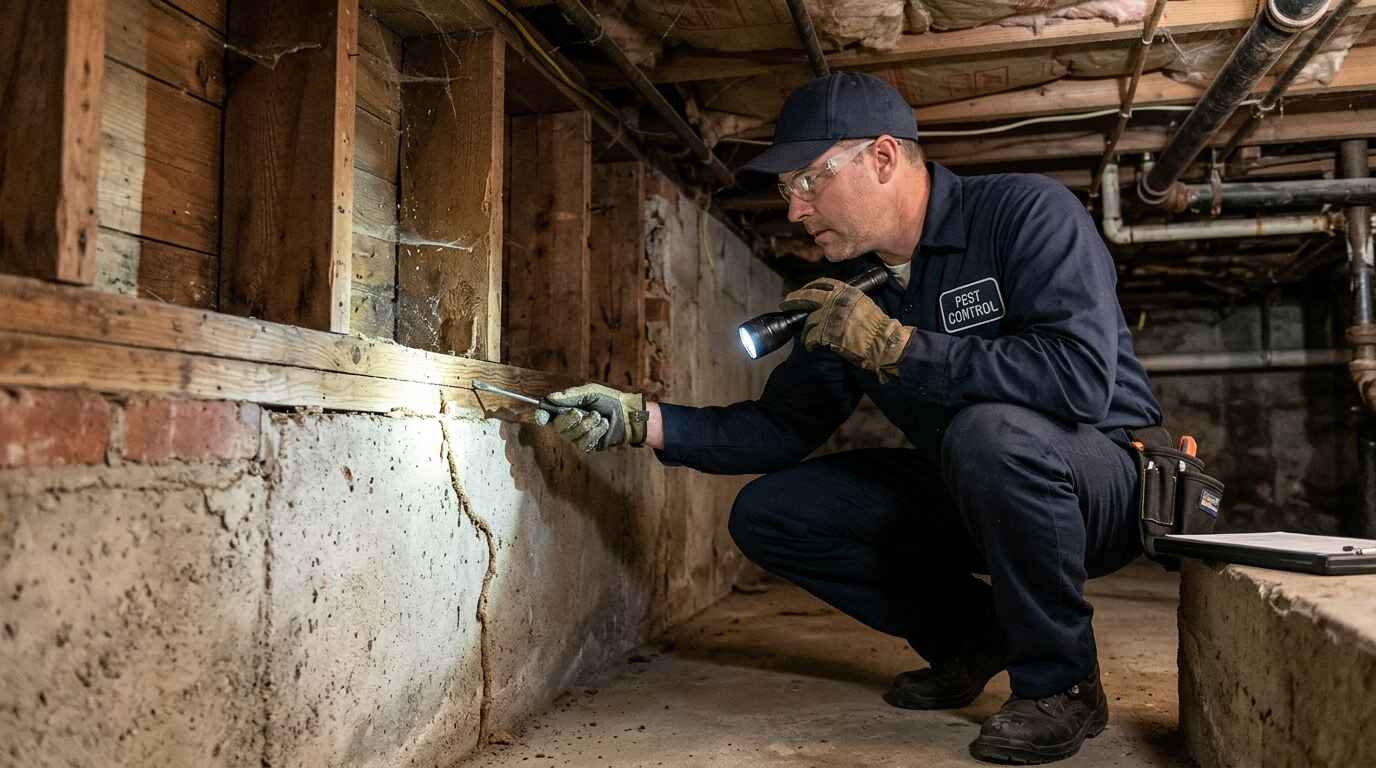
Plan
The right visit for the job
Older Waterbury homes with basements, crawl spaces, and compact yards commonly need an inspection first, with targeted treatment when activity is localized.
Quote
A straight quote
The exact quote is given on the call and changes with treatment type, access, materials, time on site, and distance.
Time
A visit time
The visit time is set on the call around access to the structure, occupants, pets, and current site conditions.
From Overlook and Bunker Hill to Town Plot, Brooklyn, and the South End, Waterbury properties vary from industrial-era houses to dense two-family buildings. Treatment may involve basement sills, crawl spaces, slab edges, utility rooms, and narrow side yards where rocky ground and older additions limit exterior access.
Services
Termite Control Services in Waterbury
Waterbury homes often have masonry foundations, finished basements, older framing, and additions built in stages. Dense lots in Town Plot and the Overlook can restrict exterior treatment, while wet spring soil and snow cover affect what is accessible. The work starts with finding activity, moisture, wood contact, and entry routes before choosing a treatment suited to the structure.
Residential termite control
Waterbury residential treatment accounts for older foundations, attached garages, finished basements, and narrow side access around two-family homes.
Termite inspection
An inspection checks accessible framing, sill areas, crawl spaces, and basement edges in Waterbury homes for activity and conducive conditions.
Wood-destroying insect report
A wood-destroying insect report documents accessible findings for Waterbury property decisions, including damage around older additions and utility penetrations.
Preventive termite treatment
Preventive work helps address likely entry routes around Waterbury foundations, porches, steps, and soil-to-wood contact before activity is visible.
Subterranean termite treatment
Subterranean termite treatment examines soil contact, foundation edges, slabs, and damp basement areas common around Waterbury properties.
Commercial termite control
Commercial treatment serves Waterbury storefronts, warehouses, offices, and multi-unit buildings where access, occupants, and operating hours affect the work.
Termite damage assessment
Damage assessment separates termite evidence from moisture or structural wear in Waterbury’s older housing stock and industrial-era buildings.
Sizes
Termite Control Options Available in Waterbury
The inspection is the usual starting point for Waterbury jobs because older homes can conceal activity in basements, wall voids, crawl spaces, and additions. A targeted treatment fits isolated activity, while broader evidence may require coordinated whole-home treatment.
| Size | Dimensions | Good for |
|---|---|---|
| Termite Inspection | A technician examines accessible areas for termites, conducive conditions, and evidence of damage. | This fits a Waterbury sale, renovation, or concern about mud tubes, damaged wood, or winged insects. Accessible basements, crawl spaces, utility rooms, and exterior edges are examined. |
| Targeted Treatment | Treatment focuses on identified activity and accessible entry or nesting areas. | This suits confirmed activity around one entry route, porch, sill, or accessible nesting area in a tight Waterbury lot, especially when the rest of the structure shows no active evidence. |
| Whole-Home Treatment | A coordinated treatment addresses active termite activity around the structure and likely entry routes. | This fits active or widespread termite activity around a larger Waterbury house, multi-unit property, or connected additions where entry routes extend across foundations, slabs, and exterior edges. |
Which option fits common Waterbury projects
| Project | Size | Why |
|---|---|---|
| Older home check | inspection | Basements, additions, and hidden sill areas in Waterbury’s older neighborhoods make an accessible inspection the sensible first step. |
| Mud tube activity | targeted treatment | A confirmed route at one foundation section may suit targeted treatment when other accessible areas show no active evidence. |
| Home renovation | inspection | Opening walls or replacing floors in Town Plot and Overlook homes calls for inspection before concealed wood is disturbed. |
| Multi-unit building | whole-home treatment | Connected units and shared foundations can allow activity to move beyond one room, requiring a coordinated structure-wide approach. |
| Commercial building | targeted treatment | A defined activity area in a Waterbury storefront or warehouse may be treated around its accessible entry and nesting areas. |
Schedule Waterbury termite treatment
Click Here to Call (888) 510-9023Cost
What Affects Termite Control Cost in Waterbury
The exact quote is given on the call after the job is described. Cost depends on the type and size of the structure, evidence found, treatment area, parts or materials, time on site, access, distance from the Waterbury setting, and after-hours work.
To avoid surprise charges, describe the structure, visible evidence, access limits, and any prior treatment during the call. The quote can then reflect the actual treatment type, materials, distance, and site conditions.
Structure size
A compact house, connected two-family building, and commercial structure require different inspection paths and treatment coverage, especially in dense Waterbury blocks.
Access and distance
Basements, crawl spaces, narrow side yards, rocky ground, parking limits, and travel from the Waterbury area can change the work involved.
Materials and parts
Treatment materials, access supplies, and parts needed for the selected method affect cost when foundation edges, slabs, or concealed routes require additional work.
Time on site
The evidence, number of accessible areas, occupants, pets, preparation, and after-hours conditions can change how long the Waterbury visit takes.
What goes in
Types of Work We Handle
Active Termite Infestations
This covers confirmed or suspected live termite activity, including mud tubes, discarded wings, or damaged framing around a Waterbury basement, porch, or foundation.
Preventive Termite Protection
This covers treatment planning for likely entry routes and conducive conditions at Waterbury houses, additions, garages, and properties being renovated.
Wood Damage Assessment
This covers accessible assessment of damaged wood in older Waterbury homes, including sill areas, basement framing, trim, and industrial-era additions.
Not accepted
Treatment does not cover unrelated plumbing, structural reconstruction, concealed areas that cannot be accessed, hazardous materials, or pest problems outside the agreed termite work.
How to protect your home in Waterbury
Clear basement edges
Move stored items away from foundation walls so accessible sill areas, corners, and utility penetrations can be examined.
Keep pets secured
Secure pets before the visit and follow the technician’s instructions for keeping them away from treated work areas.
Document visible evidence
Note where you saw wings, mud tubes, hollow wood, or moisture so the inspection can begin with the most useful locations.
Mention prior treatments
Share any previous termite work, repairs, renovations, or unfinished areas that could affect treatment choices.
Expose utility access
Keep utility rooms, crawl-space entrances, basement stairs, and exterior foundation sections reachable during the scheduled visit.
Projects
Termite Control for Different Projects
Termite Inspection Control
Inspection control begins with accessible basements, crawl spaces, sill plates, and exterior foundation edges in Waterbury homes and multi-unit properties.
Subterranean Termite Control
This work focuses on soil-to-structure routes, foundation edges, slabs, and damp basement conditions found around Waterbury and New Haven County properties.
Drywood Termite Control
Drywood concerns require careful examination of accessible framing and furnishings; the treatment plan depends on evidence rather than assuming the species.
Preventive Termite Control
Preventive treatment addresses conducive conditions and likely entry routes around Waterbury porches, additions, garages, and older masonry foundations.
Commercial Termite Control
Waterbury storefronts, warehouses, offices, and multi-unit buildings need treatment planned around business access, stored goods, occupants, and connected spaces.
Termite Damage Control
Damage control documents accessible deterioration and active evidence in Waterbury’s older housing stock before repairs or renovation conceal the affected areas.
Termite Barrier Control
Barrier planning considers foundation edges, slabs, utility penetrations, and narrow yards in Waterbury neighborhoods where exterior access is limited.
How it works
How Termite Control Works in Waterbury
Request An Inspection
Describe the building, visible evidence, prior treatment, basement or crawl-space access, and any work already planned at the Waterbury property.
Identify Termite Activity
The technician examines accessible wood, soil contact, foundation edges, moisture conditions, and likely entry routes to distinguish activity from old damage.
Review The Treatment Plan
The recommended treatment explains the affected areas, access needs, preparation, materials, and limits based on what can be safely reached.
Protect The Structure
Treatment addresses the selected activity or entry routes, while follow-up repairs and moisture correction may remain separate work for the property owner.
Weather in Waterbury
Waterbury’s cold snowy winters can cover soil and restrict exterior inspection, while wet springs expose moisture and soil contact around foundations. Weather can also affect access to rocky yards, crawl-space entrances, and treatment areas, so current conditions are reviewed when the visit is set.
Treatment area access
Work may occur in crawl spaces, basements, slab edges, utility rooms, wall-adjacent areas, and yards. Dense Waterbury lots, parked cars, finished rooms, stored belongings, rocky ground, and low crawl-space openings can limit where equipment and treatment materials can be used.
Permits
Termite Control Permits and Placement Rules in Waterbury
Access rules
Termite treatment at a private Waterbury property usually does not involve a street permit, but unusual work affecting public space or a regulated structure may require direction from the City of Waterbury. The call covers what local approval or inspection question applies and who is responsible for arranging it.
Landlord and HOA requirements
Condominium, HOA, covenant, and landlord rules in New Haven County may control exterior treatment, shared foundations, tenant entry, or visible equipment. Have the property rules and owner contact ready before the treatment plan is finalized.
What the work area needs
Clear access to the affected foundation, basement, crawl space, utility room, and shutoffs. Keep parking available for the work vehicle, secure pets and people away from the area, and account for snow, wet soil, or frozen ground around the Waterbury property.
Timing
Seasons, Weather and the Best Time to Call in Waterbury
Termite concerns in Waterbury often become more noticeable during spring thaw and wet conditions, when soil contact and moisture are easier to see. Swarming activity can also prompt inspections during warmer periods. Winter does not eliminate concern, because termites may remain active in protected foundations, basements, and wall spaces.
Spring thaw and wet ground
Thawing soil, spring moisture, and runoff can reveal mud tubes or foundation contact around Waterbury homes. Exterior access may remain difficult where snow, saturated ground, or rocky yards limits inspection.
Winter access limits
Snow and frozen ground can restrict exterior treatment and make foundation edges harder to reach. Interior basements, utility rooms, and accessible crawl spaces may still provide useful inspection areas.
Book a Waterbury termite inspection
Click Here to Call (888) 510-9023Service area
Termite Control Areas We Serve
Service covers Waterbury neighborhoods and settings including Overlook, Bunker Hill, Town Plot, Brooklyn, the South End, the North End, and the downtown area. Work also reaches dense residential blocks, industrial corridors, multi-unit buildings, and nearby New Haven County locations as arranged on the call.
Waterbury is part of our New Haven County coverage, and we also serve the neighboring communities below.
Why us
Why Call a Termite Control in Waterbury?
Waterbury’s older housing often combines masonry foundations, finished basements, additions, and narrow side yards. That means termite work depends on reaching the sill, slab edge, crawl space, and soil contact instead of treating every property the same way.
Industrial-era construction and dense lots in Waterbury can hide entry routes behind porches, utility penetrations, garages, and stored belongings. The treatment plan is shaped by what the structure reveals and what the site allows the technician to access safely.
FAQs
Termite Control FAQs
How much does termite control cost in Waterbury?
The exact quote is given on the call. Cost depends on the structure’s size, evidence of activity, treatment type, materials, time on site, access, distance, and after-hours work. Describe the basement, crawl spaces, additions, and visible signs so the quote reflects the Waterbury property.
Which termite visit fits my Waterbury home?
An inspection is usually the starting visit for an older Waterbury home or a property with uncertain evidence. Targeted treatment fits isolated confirmed activity, while whole-home treatment suits activity across connected areas, additions, foundations, or multiple units.
How soon can someone come to my Waterbury property?
The visit time is set on the call because access, current conditions, and the requested treatment affect scheduling. Ask about available timing and describe any active damage, renovation deadline, tenant access issue, or seasonal limitation.
What does Waterbury termite treatment cover?
The booked termite treatment addresses identified termite activity, accessible entry or nesting areas, and the treatment plan selected for the structure. The work may involve basements, crawl spaces, foundation edges, slabs, utility rooms, or yards where those areas are accessible.
What does termite control not cover?
It does not cover unrelated plumbing, structural reconstruction, hazardous materials, inaccessible concealed areas, or pest problems outside the agreed termite work. Waterbury homes with moisture damage or deteriorated framing may need separate repair work after treatment.
Does Waterbury termite treatment need a permit or inspection?
Most private termite treatment does not involve a street permit, but unusual work affecting public space or a regulated structure may require direction from the City of Waterbury. The call addresses the applicable approval question and who arranges it.
Do I need to leave my Waterbury home?
Access requirements depend on the treatment method, materials, occupants, pets, and work areas. Keep basements, crawl spaces, utility rooms, and exterior foundation sections reachable, then follow the technician’s instructions about people and pets during the visit.
What should I have ready when calling about termites?
Have the property location, building type, approximate size, accessible areas, visible evidence, previous treatment details, renovation plans, and access restrictions ready. In Waterbury, mention narrow yards, rocky ground, finished basements, snow, or parked vehicles that may limit the work.
Can Waterbury weather affect termite treatment?
Yes. Snow, frozen ground, wet spring soil, and saturated or rocky yards can limit exterior inspection and treatment access. Interior basements, utility rooms, and crawl spaces may still be reviewed when safely reachable, with the visit plan set around current conditions.
Why are older Waterbury homes harder to treat?
Older Waterbury homes often have additions, masonry foundations, finished basements, concealed sill areas, and narrow lots shaped by dense neighborhood construction. Those features can hide entry routes and restrict exterior access, so the treatment is based on accessible evidence rather than a standard layout.